The Truth About Sauna and Ice Baths: Scientific Insights for Optimal Wellness
In discussions about fitness training, athletic recovery, and wellness lifestyles, the practice of following the sauna and ice baths is increasingly regarded as a common recovery routine. Many sources describe this combination as aiding in accelerated recovery, improving performance, and even enhancing overall health, leading to its widespread adoption.
However, there is no one-size-fits-all answer in scientific and practical perspectives. Saunas and ice baths represent two distinct stimulation forms. Ignoring the intended purpose, individual differences, and specific execution methods when simply linking the two often leads to overestimating their effects and may even hinder recovery in certain cases.
Multiple studies in health and rehabilitation fields indicate that the benefits of contrast therapy depend on the temperature range, duration, and frequency—not merely on the completeness of the sequence. For instance, the science literature on contrast therapy emphasizes the importance of gradual transitions and controlled stimulation, alongside analyses of the applicability of combining saunas and ice baths.
This article will re-examine whether an ice bath is necessary after a sauna, and under what conditions this combination truly holds value, based on scientific evidence and practical application scenarios.
A Misused Sauna and Ice Baths Ritual

Many have adopted a fixed belief in recent times: an ice bath must be immediately followed by a sauna session to achieve a complete and effective recovery process. This perception isn’t entirely rooted in scientific evidence but stems from long-reinforced cultural inertia thinking.
Historically, practices involving contrast therapy originated in parts of Northern Europe. These traditions were built upon long-term adaptation, gradual implementation, and specific lifestyles—not tailored as recovery solutions for modern high-intensity training or fast-paced living. When simplified into a quickly replicable process, the original prerequisites and limitations are often overlooked.
In scientific literature, contrast therapy is typically defined as the alternating application of heat and cold stimuli to influence vasoconstriction and vasodilation, thereby regulating circulatory and neurological responses. Its core principle lies not in the fixed sequence of sauna followed by ice bath, but in factors such as temperature range, duration of stimulation, using frequency, individual health status, and whether a reasonable transition exists between hot and cold steps. Deviating from these conditions and treating contrast therapy as a standardized template inherently invites misuse.
Misconceptions About Saunas and Ice Baths
Ice Baths Are Not a Universal Solution for Muscle Recovery
Contrast therapy Isn't Suitable for Everyone

Faster Temperature Difference Don't Equate to Better Results
Maximizing the Effects of Contrast Therapy
Individuals with a foundation of cold exposure adaptation
When the primary goal is mental stimulation or emotional regulation
Within professionally managed commercial recovery systems
When might it impair recovery effects?
1. Immediately doing after high-intensity strength training
Research suggests that an extreme cold plunge immediately after high-intensity strength training may disrupt muscle growth mechanisms. Cold stimulation suppresses local inflammatory responses, which are essential for muscle building.
2. Direct application by first-time users or those unsuitable for cold stimulation
Untrained individuals may experience significant physiological discomfort—such as dizziness, fatigue, or irregular heartbeat—when subjected to abrupt temperature shifts.
3. Believing ice baths can eliminate all fatigue
Cold therapy is a tool, not a universal recovery solution. Sleep, nutrition, and training planning remain primary influencing factors.
How SYOCHI Helps You?
Precise temperature control
Intelligent management
Flexible scenario adaptation

Customized solutions with global support
Conclusion
Related Posts

SYOCHI water chiller for ice bath has achieved significant improvement in structural design and use experience in the application of copper pipe anti-oxidation technology, split flowmeter design, and optimization of four-layer filtration water system.
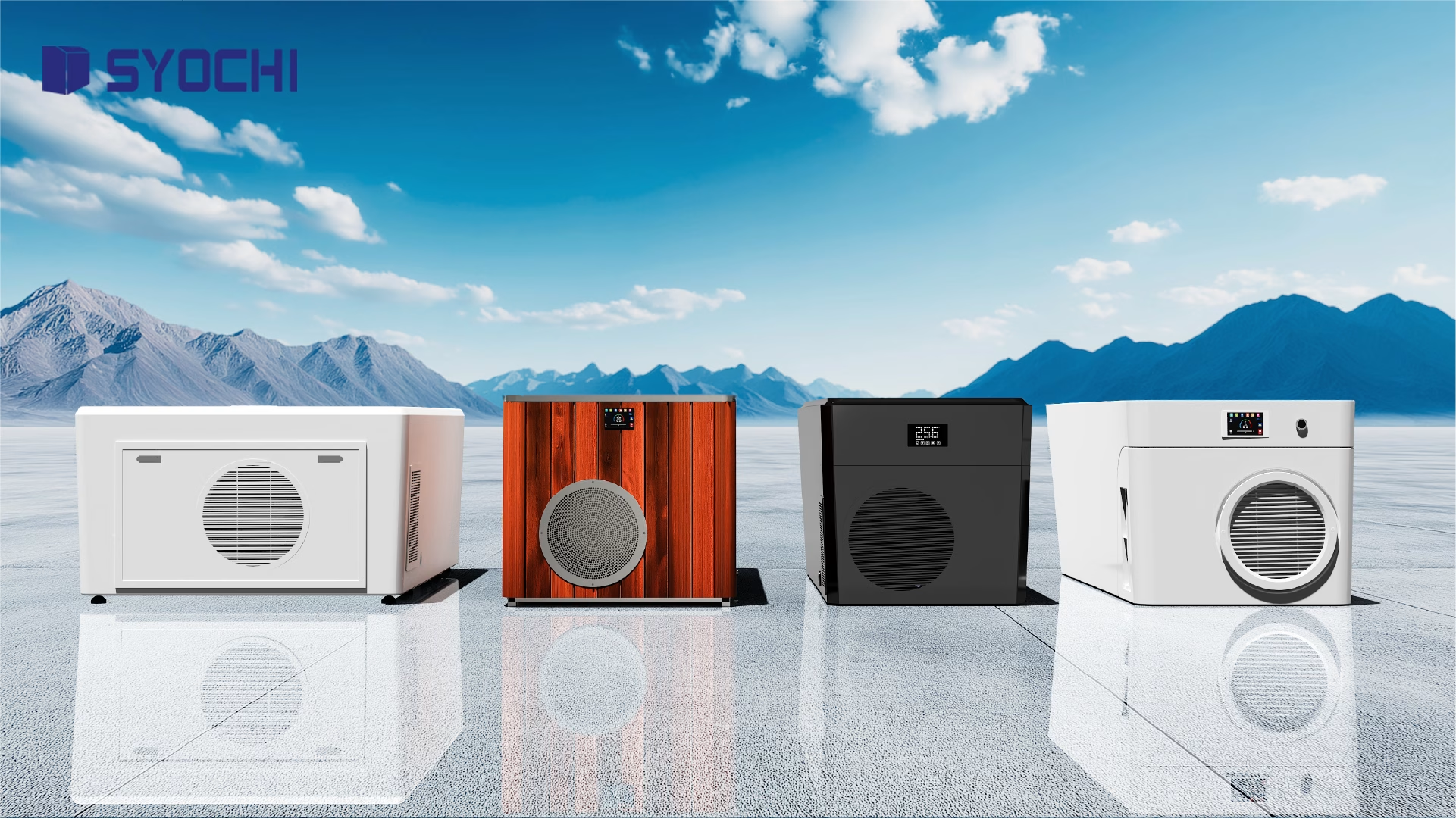
This report will provide a comprehensive analysis of the latest trends and developments in the ice bath chiller market by 2025.
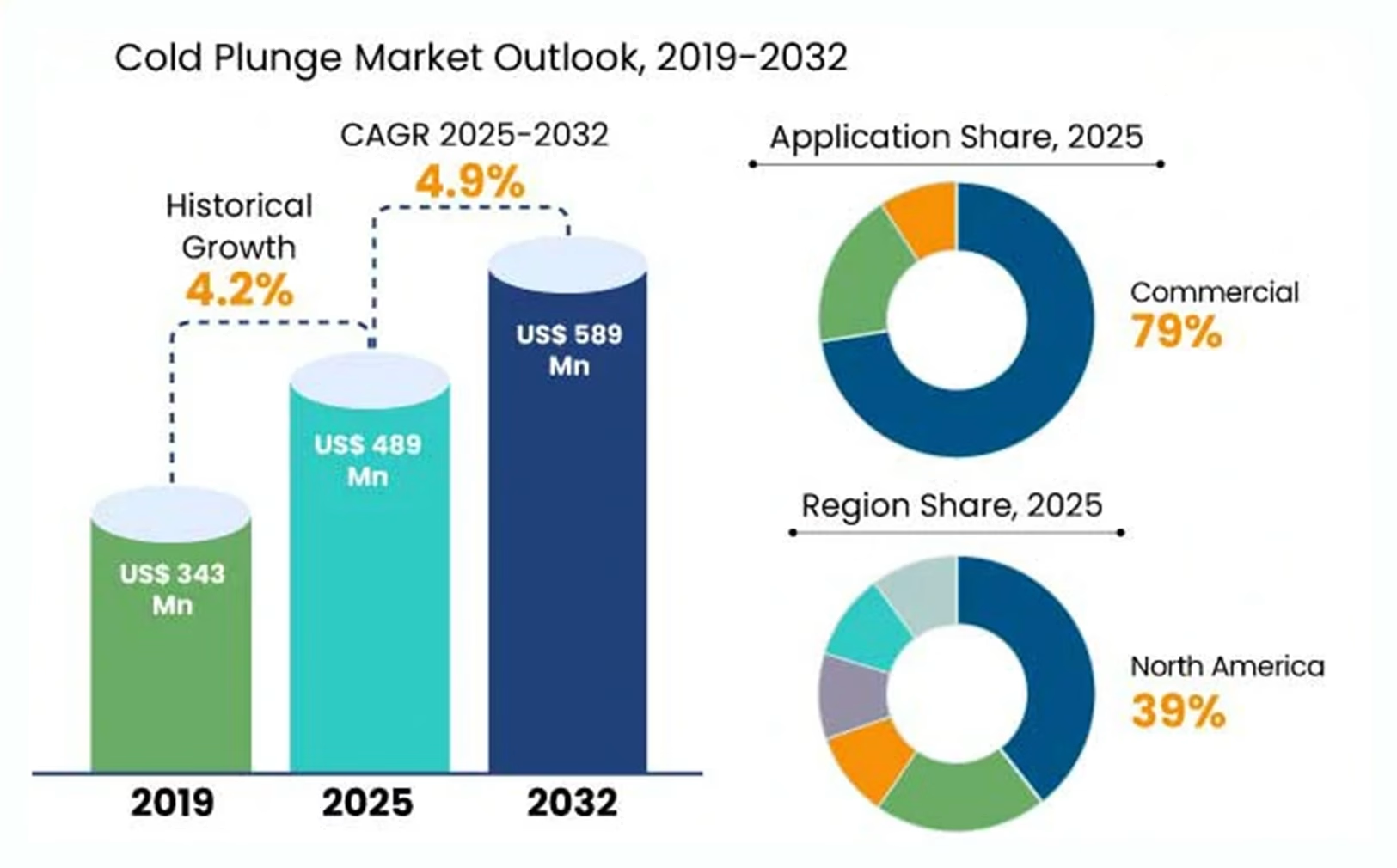
2025 ice bath market share of $500 million, market growth rate of 5.5%, degree of competition, market Features etc.
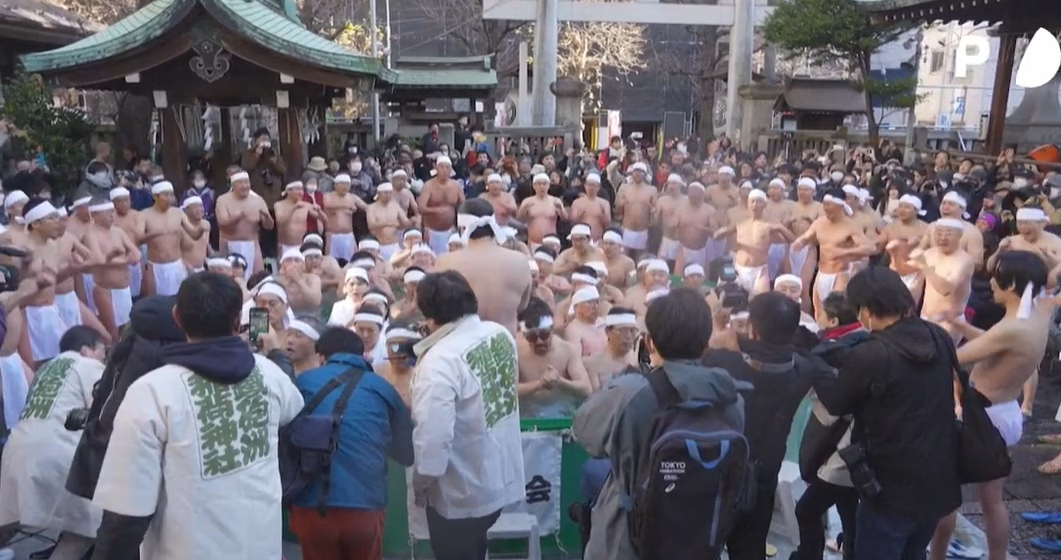
SYOCHI will introduce some festivals and events in Japan related to ice baths 2025, helping you start your ice baths experience safely.

This blog will help client who want to start a cold plunge business in gym with a complete guide, including choose reliable supplier, ice plunge chiller and bathtubs, power consumption and so on.

SYOCHI presents its latest smart ice bath chiller at Piscina Barcelona 2025, combining intelligent control and energy efficiency.